
Play Aviator Now!
Home → Auto Cashout
Aviator Auto Cashout
Auto cashout in Aviator
The auto cashout feature in Aviator, developed by Spribe, closes a bet automatically at a chosen multiplier. This tool removes reaction time from the outcome but does not change the built-in edge of the game. The theoretical return over a very long run is 97.00%, with a house edge of 3.00%. Mobile users benefit from this automation as it ensures consistent execution regardless of network latency. The maximum win cap stands at x1,000,000 for those who time their exits perfectly.
Aviator round parameters
| Max multiplier | x1,000,000 |
| RTP | 97.00% |
| Bet range | 0.10 EUR / USD / GBP (varies by operator) - 100 EUR / USD / GBP (varies by operator) |
When playing on mobile devices, the auto cashout setting in Aviator provides a reliable safety net against human error. Spribe designed this crash game to be provably fair using SHA-256 combining server and client seeds. The dual-bet mode allows players to set two independent cashout targets within a single round structure. This functionality helps manage risk effectively when internet connections fluctuate during high-stakes sessions on smartphones. Players can adjust these settings before each round begins without interrupting the continuous flow of gameplay.
Unlike traditional slots, Aviator has no reels or paylines, making the auto cashout feature essential for strategic play. The multiplayer live bet feed shows other players' actions, creating a transparent environment for decision-making. Certified by iTech Labs and BMM Testlabs, the game ensures that every multiplier rise is genuine and unbiased. Mobile players often prefer this automated approach because it reduces the stress associated with rapid manual inputs. The RTP remains at 97.00% theoretically, though operators may configure lower rates like 96% or 94%.
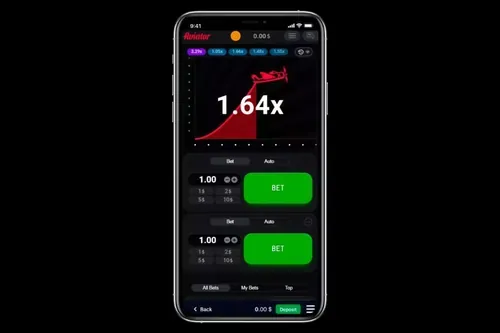
Setting a target multiplier
Setting a target multiplier in Aviator requires understanding the relationship between potential profit and crash probability. The maximum win limit is x1,000,000, which represents the highest possible payout for a single successful cashout. Players must choose a specific number where the rising multiplier will trigger an automatic withdrawal of funds. This strategy aligns with the game's provably fair algorithm based on SHA-256 cryptographic hashing methods. Mobile screens display these multipliers clearly, allowing quick adjustments before the plane takes off again.
Spribe's design for Aviator encourages players to set conservative target multipliers to ensure consistent small wins. The theoretical return of 97.00% suggests that lower targets yield more frequent payouts over extended sessions. On mobile devices, setting a target like x2.00 or x3.00 helps maintain bankroll stability during play. The dual-bet mode allows one bet to target a low multiplier while the other aims higher. This balance minimizes the impact of random crashes that occur unpredictably throughout the gaming session.
High target multipliers in Aviator increase variance significantly compared to lower, safer options. The house edge of 3.00% applies equally regardless of the chosen cashout point or strategy employed. Mobile players should note that reaching extreme values like x100 or higher happens rarely in practice. The multiplayer live bet feed reveals how many others are chasing similar high-risk rewards simultaneously. Operators may offer configurations with RTPs of 94% or 96%, affecting the long-term profitability of high-target strategies.
Why automation removes hesitation
Automation in Aviator eliminates the hesitation that often leads to missed cashouts during rapid multiplier increases. Spribe engineered the game so that timing is critical, making manual reactions risky on smaller mobile screens. The auto cashout feature ensures that funds are withdrawn exactly when the predetermined threshold is reached. This reliability is crucial given the 97.00% theoretical return rate which depends on consistent execution over time. Mobile users appreciate this consistency because network delays can easily cause humans to miss the optimal moment.
The provably fair system in Aviator uses SHA-256 to combine server seeds with multiple client seeds and a nonce. This transparency means players can verify each round's outcome independently after it concludes. Automation supports this verification process by removing subjective timing errors from the equation entirely. Certified by iTech Labs and BMM Testlabs, the game maintains strict standards for fairness and accuracy. Mobile players benefit from knowing their bets are handled mechanically rather than relying on split-second reflexes.
Aviator’s dual-bet mode allows players to automate different strategies simultaneously for diversified risk management. One bet might cash out early at x1.50 while another waits for x10.00 or higher. This approach leverages the multiplayer live bet feed to observe community behavior without emotional interference. The maximum win potential of x1,000,000 remains accessible through patient automated waiting strategies. Operators configuring lower RTPs like 94% still respect the core mechanics that make automation effective for long-term play.
Low targets versus high targets
Low target multipliers in Aviator offer higher frequency wins but smaller individual payouts per round. Spribe designed the crash mechanic so that most rounds end below x2.00, favoring conservative betting approaches. The theoretical return of 97.00% is achieved through thousands of small, successful cashouts rather than rare jackpots. Mobile players often start with low targets to understand the rhythm of the game before increasing stakes. The house edge of 3.00% remains constant regardless of whether one chases low or high multipliers consistently.
High target multipliers in Aviator provide substantial payouts but occur much less frequently during gameplay. The maximum win cap of x1,000,000 illustrates the extreme potential available to patient automated players. Provably fair algorithms ensure that these rare events are statistically distributed according to mathematical expectations. Certified by BMM Testlabs, the game guarantees that high-value outcomes are not manipulated or suppressed artificially. Mobile users tracking performance data will notice that high targets require significantly longer periods to realize profits.
Comparing low and high targets in Aviator reveals the importance of volatility management in instant games. Spribe’s developer framework allows adjustable parameters that influence how often certain multiplier ranges appear. The dual-bet mode enables mixing both strategies within a single round for balanced exposure to variance. Operators may configure RTPs at 96% or 94%, slightly altering the expected value of each target level. Understanding these differences helps mobile players select strategies aligned with their personal risk tolerance levels.
Choosing a cashout target
The theoretical return of Aviator is fixed at 97.00% by developer Spribe, which establishes a house edge of 3.00% over the long term. Operators may adjust this configuration to lower rates such as 96% or 94%, directly increasing the mathematical disadvantage for players who attempt to predict safe exits. This variance means that setting a conservative target like x1.50 does not guarantee profit when the underlying RTP drops significantly below the advertised baseline.
Players can utilize the auto cashout feature to automatically close a bet at a chosen multiplier before the plane flies away. This mechanism removes human reaction time from the outcome but does not change the built-in edge or the probability of the crash occurring. Using automation ensures discipline but still subjects the bankroll to the same statistical erosion defined by the game's specific RTP configuration.
The maximum win cap allows a single round to reach x1,000,000 if a player correctly predicts an extremely high multiplier before the crash. Achieving this top tier requires patience and a strategy that accepts frequent small losses in exchange for one massive payout event. Most sessions will never approach this limit, as the random number generator determines the crash point independently of previous rounds.
Aviator: key facts
| Parameter | Value |
|---|---|
| Game | Aviator |
| Studio | Spribe |
| Released | 2019 |
| RTP | 97.00% |
| House edge | 3.00% |
| Max win | x1,000,000 |
Frequency against payout size
Aviator operates as a crash game with no reels, paylines, or spins, meaning every round consists of a rising multiplier that must be cashed out before it ends. The frequency of wins depends entirely on the multiplier threshold set by the player rather than a fixed hit rate found in traditional slot machines. Lower targets yield higher frequency but smaller payouts, while higher targets reduce the win rate significantly.
Comparing Aviator to other titles like Plane Game by Spribe, which also lists a volatility of high, reveals similar risk profiles in instant play mechanics. Both games require players to manage their exposure to the house edge through careful timing rather than relying on symbol combinations. The lack of physical reels in Aviator means the speed of each round is determined solely by the server seed and client nonce combination.
A step-by-step analysis shows that betting consistently at x2.00 results in more frequent positive outcomes than aiming for x10.00. However, the law of large numbers ensures that the operator retains their percentage regardless of the chosen exit point. Players should calculate their expected loss per hour based on bet size and round duration rather than assuming a specific win frequency guarantees success.
Testing targets in demo
Spribe provides a demo mode for Aviator that allows users to practice cashing out without risking real funds or the welcome bonus structure. This environment replicates the provably fair algorithm using SHA-256, ensuring the multiplier behavior matches the live casino experience exactly. Testing here helps players understand how quickly the plane accelerates and when the crash typically occurs during different phases of play.
Users can test the dual-bet mode feature to place two simultaneous wagers with independent cashout targets in the demonstration version. One bet might aim for a low multiplier to cover costs while the second chases a higher payout, mimicking advanced strategies used in real money play. This setup verifies whether the auto cashout function triggers correctly under rapid market conditions before financial commitment begins.
After verifying strategies in the free version, players often transition to real money accounts where they might access a 300% welcome bonus up to €2,000 plus 100 free spins. These bonuses usually apply to slots rather than instant games like Aviator, meaning wagering requirements do not count toward clearing the offer. Consequently, testing in demo remains the only way to refine cashout timing without violating bonus terms or losing deposited capital.
Adjusting after a losing streak
When a player experiences consecutive crashes before reaching their chosen multiplier, the instinct is often to increase the next bet size to recover losses. This martingale-style adjustment ignores the fact that each round in Aviator is an independent event governed by a fresh server and client seed combination. Increasing stakes after a loss does not alter the 3.00% house edge and accelerates the depletion of the remaining bankroll.
The provably fair system ensures that past outcomes have zero influence on future multipliers, making any pattern recognition purely coincidental. A losing streak in Aviator is statistically inevitable given the high volatility inherent in crash mechanics where the plane can fly away at x1.00. Recognizing this randomness prevents players from chasing unpredictable trends that do not exist in the algorithmic structure.
Instead of raising bets, analysts recommend maintaining a flat stake size to minimize variance and extend playing time during downswings. This approach aligns with the theoretical return of 97.00%, allowing the long-term average to manifest without premature bankruptcy. Players should view each round as a separate transaction rather than part of a continuous narrative requiring correction.
When to turn automation off
Automation via the auto cashout feature simplifies decision-making by executing trades at predefined multipliers without manual intervention. However, keeping this function active continuously removes the ability to react to sudden changes in the game's pace or personal focus levels. Disabling automation occasionally forces the player to engage actively with the rising multiplier, ensuring full attention remains on the screen.
Manual control becomes necessary when the live bet feed shows unusual patterns or when a player wishes to deviate from their standard strategy mid-session. For instance, if the current round seems poised to break a record high, a manual cashout at x50.00 might yield better results than a preset x10.00. This flexibility allows for opportunistic plays that rigid automation cannot accommodate.
Turning off automation also serves as a check against fatigue-induced errors where a player might forget to update their cashout limits after changing their stake size. Without automatic execution, the player must consciously confirm every exit point, reducing the risk of leaving money on the table due to outdated settings. Regularly switching between manual and automated modes helps maintain a balanced and alert gaming session.
Double bet setups
Aviator allows players to place two simultaneous wagers within a single round, offering a structured approach to bankroll management. The developer Spribe designed this feature to let users hedge their exposure by splitting funds across different risk profiles during the same flight. This dual-bet configuration ensures that one stake can secure small gains while the other chases higher multipliers without requiring separate logins.
The theoretical return of Aviator stands at 97.00%, calculated over millions of rounds where the house edge remains fixed at 3.00%. Operators may occasionally configure lower RTP settings of 96% or even 94%, which directly impacts the long-term expected value of these combined bets. Players must verify the specific game version to understand the exact mathematical advantage they face before placing their initial stakes.
This mechanic contrasts with Tower Rush by Galaxsys, which limits players to a single vertical progression path per session rather than parallel betting lanes. While Tower Rush caps its maximum win at 100x, Aviator offers a potential payout of x1,000,000 if the multiplier reaches extreme heights. The ability to manage two distinct outcomes simultaneously provides a layer of strategic depth absent in simpler crash variants.
Splitting stakes across two bets
Aviator requires players to allocate their total budget across two independent input fields, effectively creating two separate probability curves for one round. The studio Spribe implemented this split-stake system to allow granular control over risk, letting users assign larger amounts to conservative targets and smaller sums to aggressive ones. Each bet operates independently, meaning a loss on one does not automatically affect the status of the other until the crash occurs.
The provably fair algorithm uses SHA-256 to combine server seeds with client seeds and a nonce, ensuring neither stake is unfairly targeted during the calculation. Because the outcome is determined by cryptographic randomness, splitting funds does not alter the inherent 3.00% house edge embedded in the game mechanics. Players relying on statistical distribution must recognize that each round resets independently, regardless of previous split results.
Unlike slots which rely on random symbol alignment across paylines, Aviator’s crash mechanic depends entirely on timing the cashout before the plane disappears. A comparison with Tower Rush shows how its 97.00% RTP applies to a linear climb rather than a continuous rising multiplier curve. Understanding this fundamental difference helps players adjust their stake sizes appropriately when managing multiple active positions.
Combining a safe and a risky target
Aviator enables the combination of a low-multiplier auto cashout with a high-risk manual bet, balancing immediate returns against potential windfalls. Users might set the first stake to exit at 1.50x to cover costs, while leaving the second stake open to chase multipliers up to x1,000,000. This strategy leverages the game’s dual-bet mode to create a hybrid approach that mitigates variance while preserving upside potential.
The auto cashout feature closes the selected bet automatically at a chosen multiplier, removing reaction time from the outcome but not changing the built-in edge. Since the house edge remains constant at 3.00% regardless of when the player decides to withdraw, no timing strategy can mathematically overcome the casino’s advantage. Players should view auto cashouts as tools for consistency rather than methods for generating profit above the theoretical RTP.
This structured approach differs significantly from games like Tower Rush, where decisions are made sequentially rather than through simultaneous conflicting objectives. Tower Rush offers a max win of 100x, limiting the scope for massive payouts compared to Aviator’s million-fold potential. By pairing safety with aggression, players can tailor their experience to specific volatility preferences within the same round.
Limits of any automated plan
Aviator’s auto cashout function executes trades based on pre-set parameters, yet it cannot predict the random moment the plane flies away due to cryptographic fairness. The SHA-256 seed combination ensures that every crash point is generated independently, rendering any pattern-recognition software ineffective against the outcome. Players relying on automation must accept that execution speed does not influence the underlying probability distribution of the multiplier.
The maximum win cap of x1,000,000 represents the absolute ceiling for any single bet, regardless of how high the multiplier climbs before the crash. Even with perfect timing via auto cashout, the payout is strictly limited by this cap, preventing infinite growth scenarios that some players might expect. This limit applies uniformly across all configurations, including those with adjusted RTPs of 96% or 94% offered by certain operators.
Unlike Tower Rush by Galaxsys, which restricts wins to 100x, Aviator’s structure allows for significant variance despite the presence of automated safeguards. The 97.00% RTP indicates a relatively low house edge, but this figure only averages out over hundreds of thousands of rounds, not individual sessions. Automated plans must account for this statistical reality to avoid false confidence in short-term profitability.
What automation cannot fix
Aviator’s core mechanic relies on a rising multiplier that ends abruptly, meaning no amount of automation can eliminate the fundamental risk of the crash occurring before cashout. The provably fair system certified by iTech Labs and BMM Testlabs guarantees transparency, but it does not alter the negative expected value inherent in every wager. Players must recognize that technical tools enhance convenience but do not change the mathematical disadvantage of the 3.00% house edge.
The bonus terms offering a 300% welcome bonus up to €2,000 plus 100 free spins often contain wagering requirements that make rapid automated play difficult. These promotional conditions typically require substantial turnover before withdrawals are permitted, penalizing strategies that aim for quick, small wins via auto cashouts. Understanding these restrictions is crucial for managing bankrolls effectively when using automated features in conjunction with bonuses.
Comparing Aviator to Tower Rush highlights how different game structures impose unique constraints on automated strategies, with Tower Rush capping wins at 100x. While both games offer varying RTPs, the continuous nature of Aviator’s multiplier creates distinct psychological and financial pressures that automation cannot fully resolve. Players should focus on disciplined stake sizing rather than expecting technology to override the built-in mathematical realities of the game.
DemoRTP & VolatilityHow to PlayAuto CashoutStrategyBonusesMobileDownload & AppMax WinSimilar GamesReviewFAQSitemap
Aviator 2026